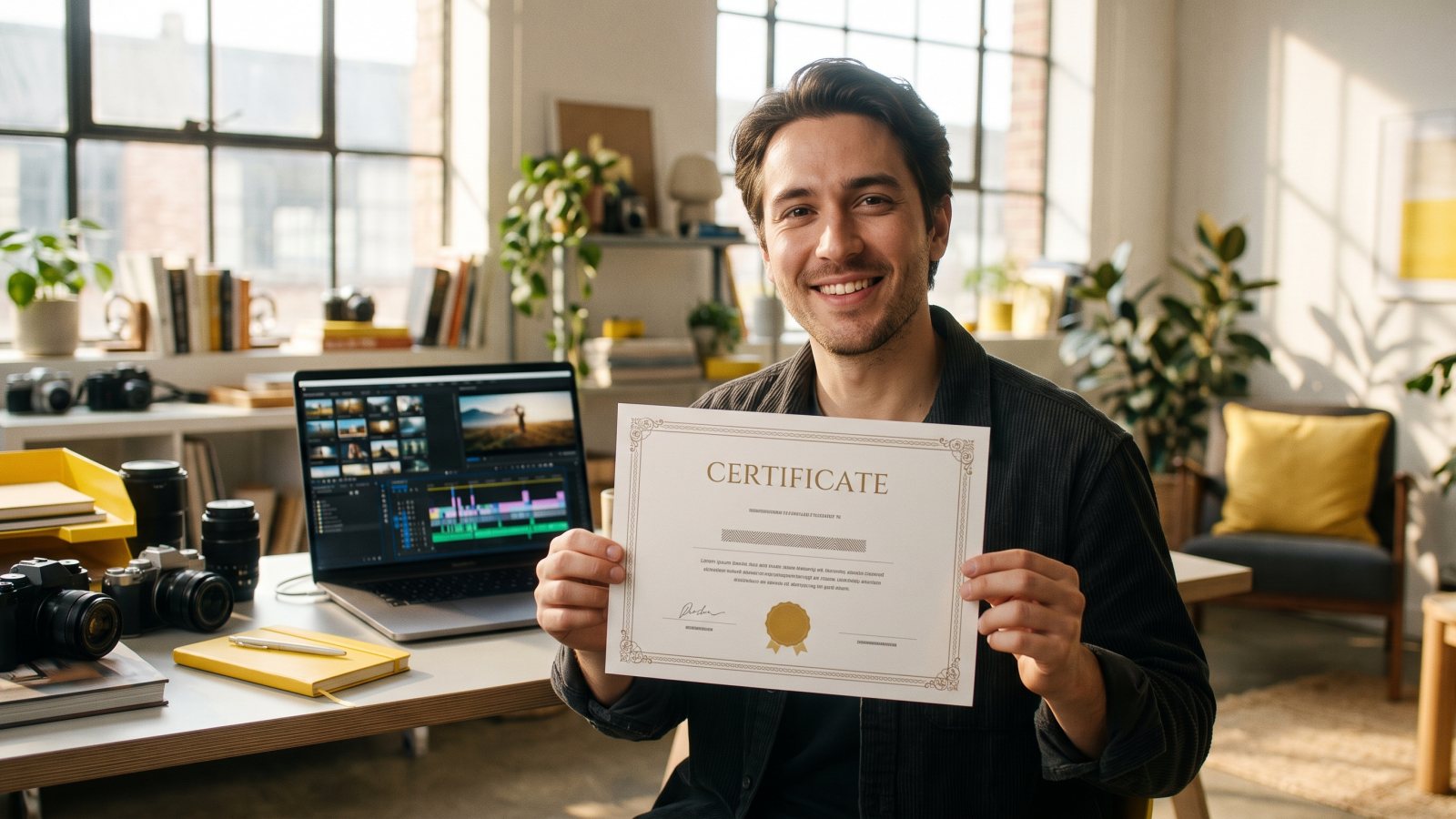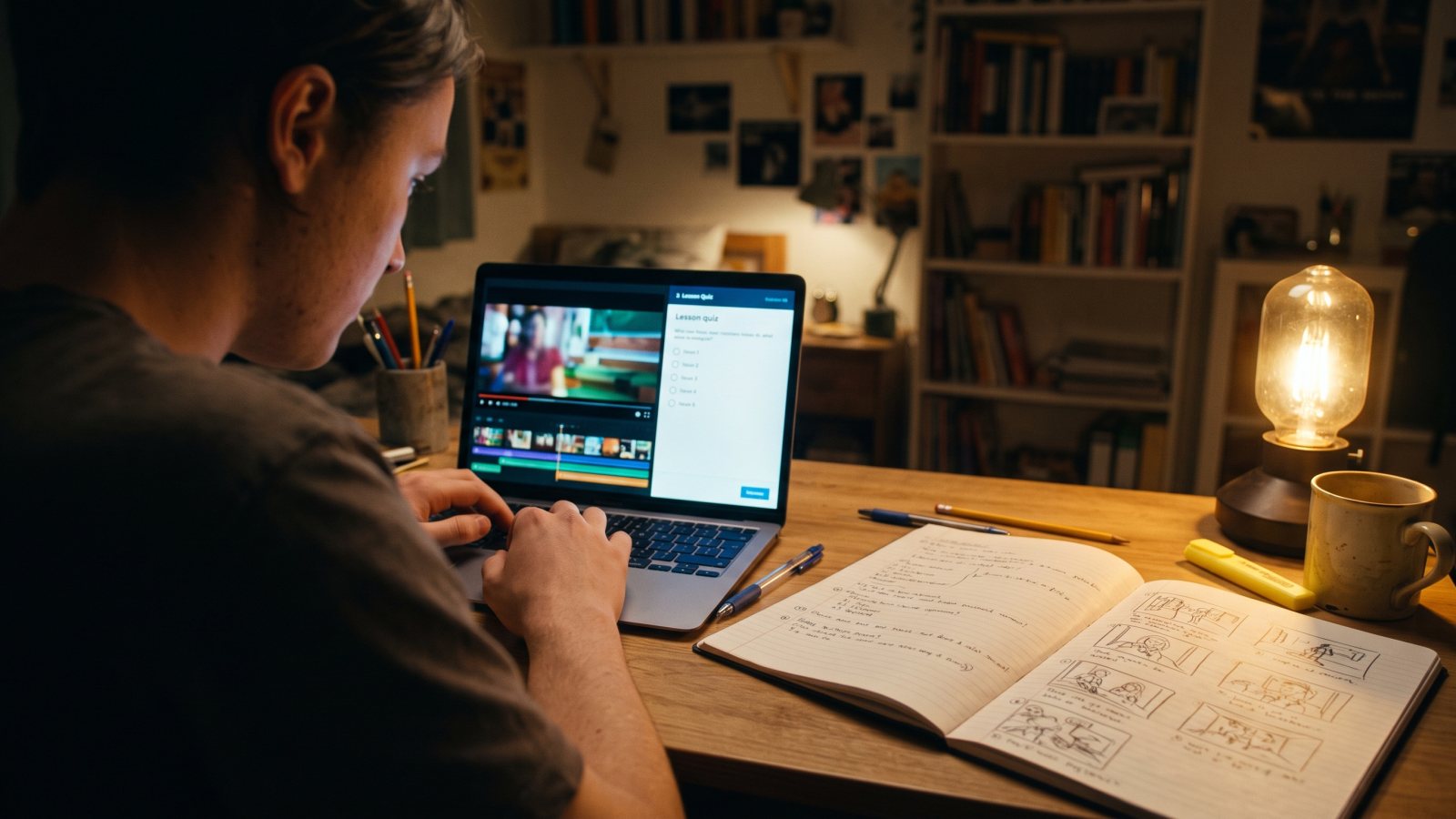
Short answer: the best AI video training for a marketing team is short, hands-on and measured. Give everyone the same foundation (prompts, camera language, model choice), then a track for their job (social ads, product films, automation), and finish with a shared standard: practical briefs and an exam. The Nano Banana Academy gives you that curriculum for free, with a verifiable Certified AI Video Expert credential for each team member who passes.
Why marketing teams need AI video training now
Short-form video is the main format on every social platform, and AI has cut the cost of a clip from a day of shooting to a few minutes. But teams that adopt the tools without training see the same problems:
- Inconsistent quality between team members.
- Credits burned on random retries.
- Brand drift: characters, colours and products that change from shot to shot.
- Rights risks: real faces without consent, unlicensed music.
Training fixes these faster than tooling.
A 4-week curriculum for a marketing team
| Week | Everyone | Team deliverable |
|---|---|---|
| 1 | AI Video Foundations: prompts, camera language, choosing a model, formats and credits | Each person delivers one directed 8-second shot |
| 2 | From Image to Motion and Video Studio Mastery | Animate three product stills; build a three-shot sequence |
| 3 | Electives by role (below) | A vertical ad with a hook and a call to action |
| 4 | Responsible AI Video, then the certification exam | A team playbook and certified members |
Electives by role
- Social media managers: Ads That Stop the Scroll; Sound, Music and Rhythm.
- Brand and content leads: Storytelling and Shot Lists; 3D and Motion Graphics.
- Growth and marketing ops: Automate with API and MCP, to generate variations at scale from your tools or from Claude.
Turn the training into a team playbook
The real return comes when what people learn becomes shared assets:
- A prompt library with your best prompts per format, model and product line.
- Brand references: approved stills of characters, products and places to keep continuity.
- A delivery checklist: format, length, captions, safe zones, resolution, music licence, consent.
- A review step: one certified person signs off client-facing videos.
Measure it
- Exercise and exam scores for each person (the Academy tracks progress per lesson).
- Retries per finished video before and after training.
- Time from brief to published video.
- Ad performance: hook rate and click-through on AI-made variations.
Why the Academy works for teams
- Free to start: everyone can take the courses with an account.
- Interactive: 58 exercises, including prompt labs graded by AI with feedback.
- A shared standard: the same practical briefs and the same 40-question exam (85% to pass) for everyone.
- Verifiable: each certificate has a public page your clients can check.
- Same tools as production: MiniMax H3, Seedance 2.5, FLUX 3 Max, upscaling to 1080p and 4K, Relight and Motion Transfer.
For larger teams or automated production, see the API and the MCP. Explore the Academy curriculum.
Frequently asked questions
How long does AI video training take for a team?
About 1 h 40 of core content per person, plus exercises and briefs. Spread over four weeks, it fits alongside normal work.
Does everyone need a paid plan?
No for the courses, which are free. The certification briefs are real generations, so whoever takes the certificate needs a plan.
Can we track who has completed what?
Each person sees their progress per course and lesson, and certified members get a public certificate page you can collect.
Does it cover brand safety and rights?
Yes. Responsible AI Video covers consent, likeness, copyright, music and a delivery checklist.