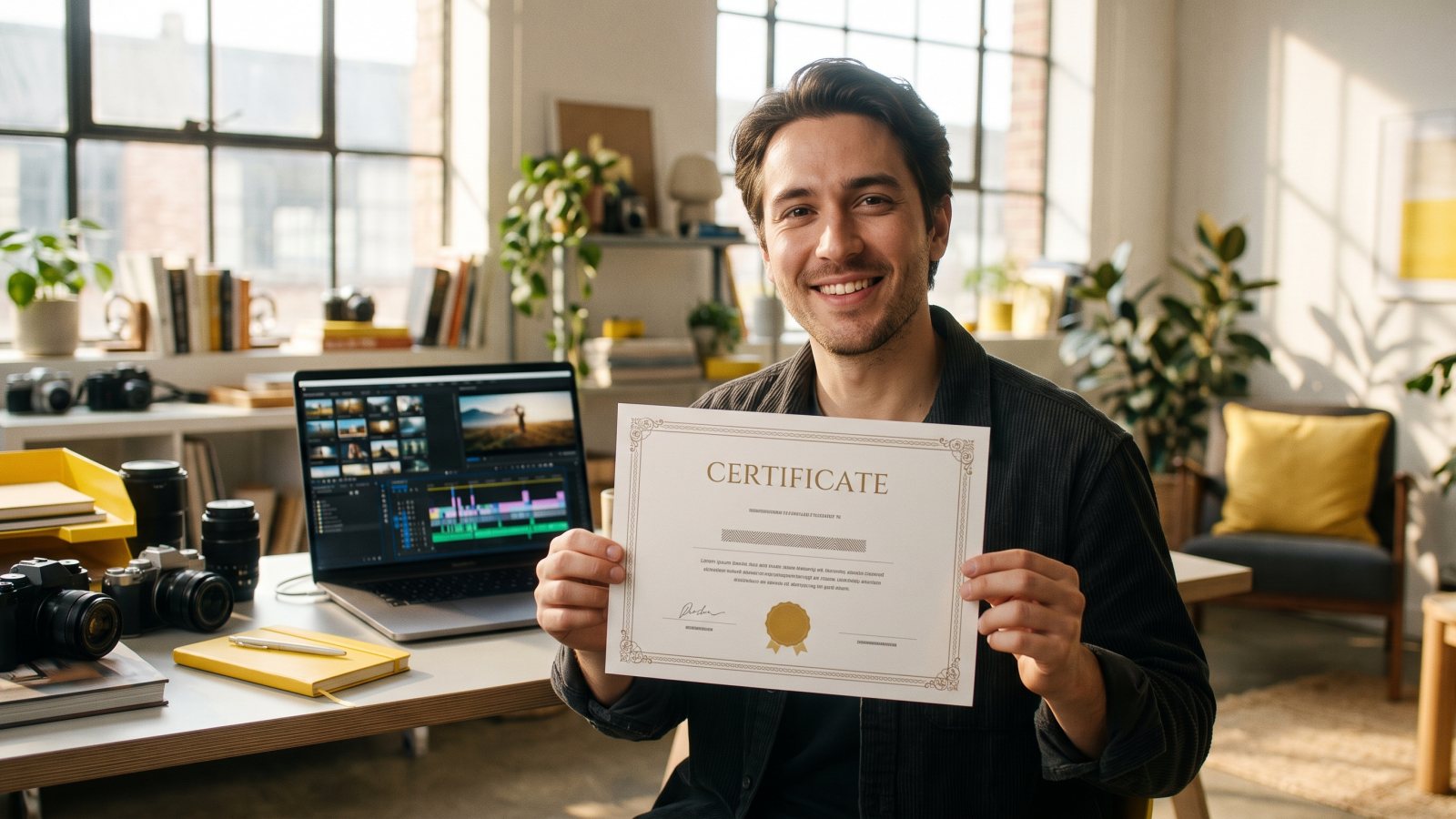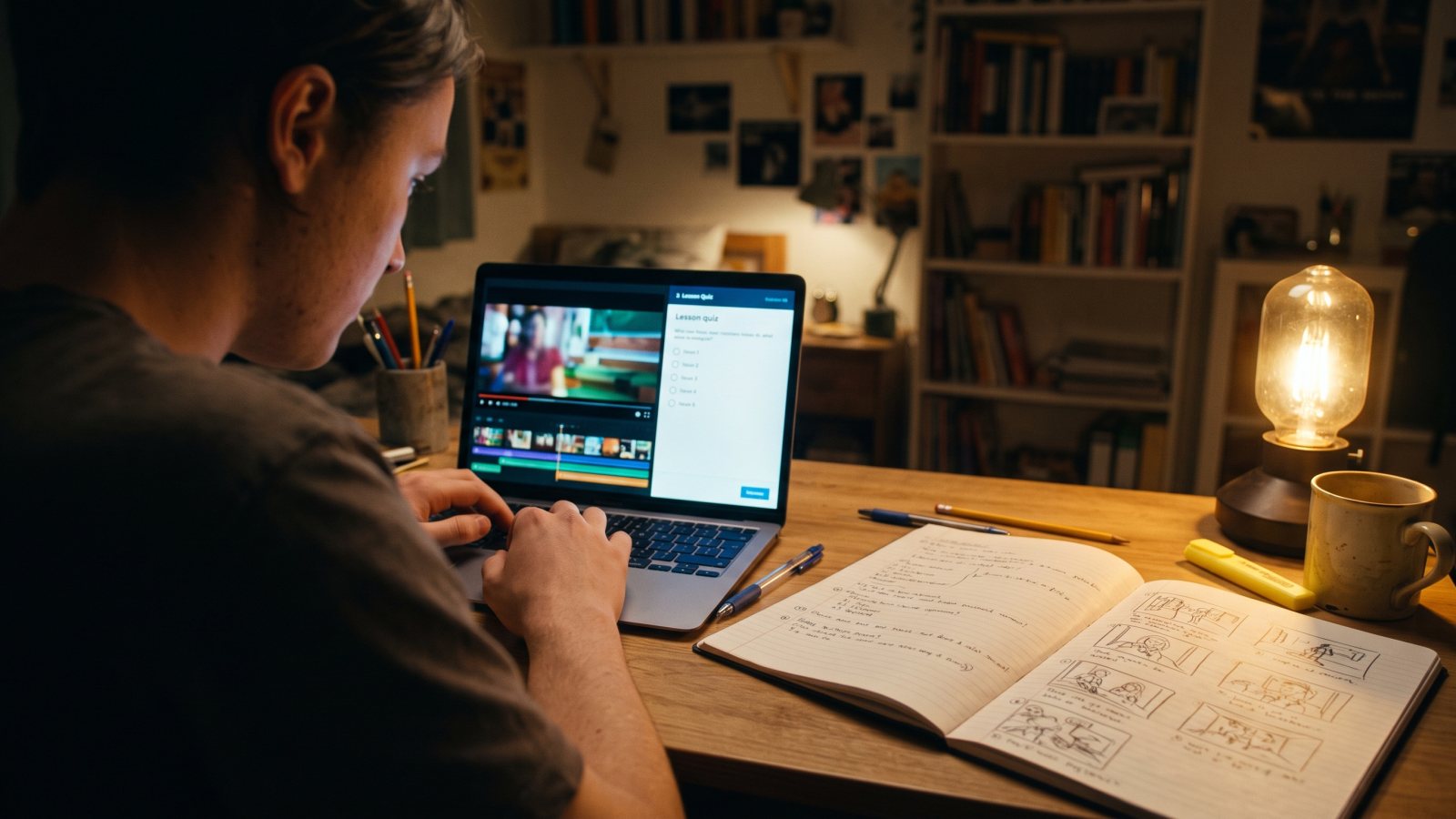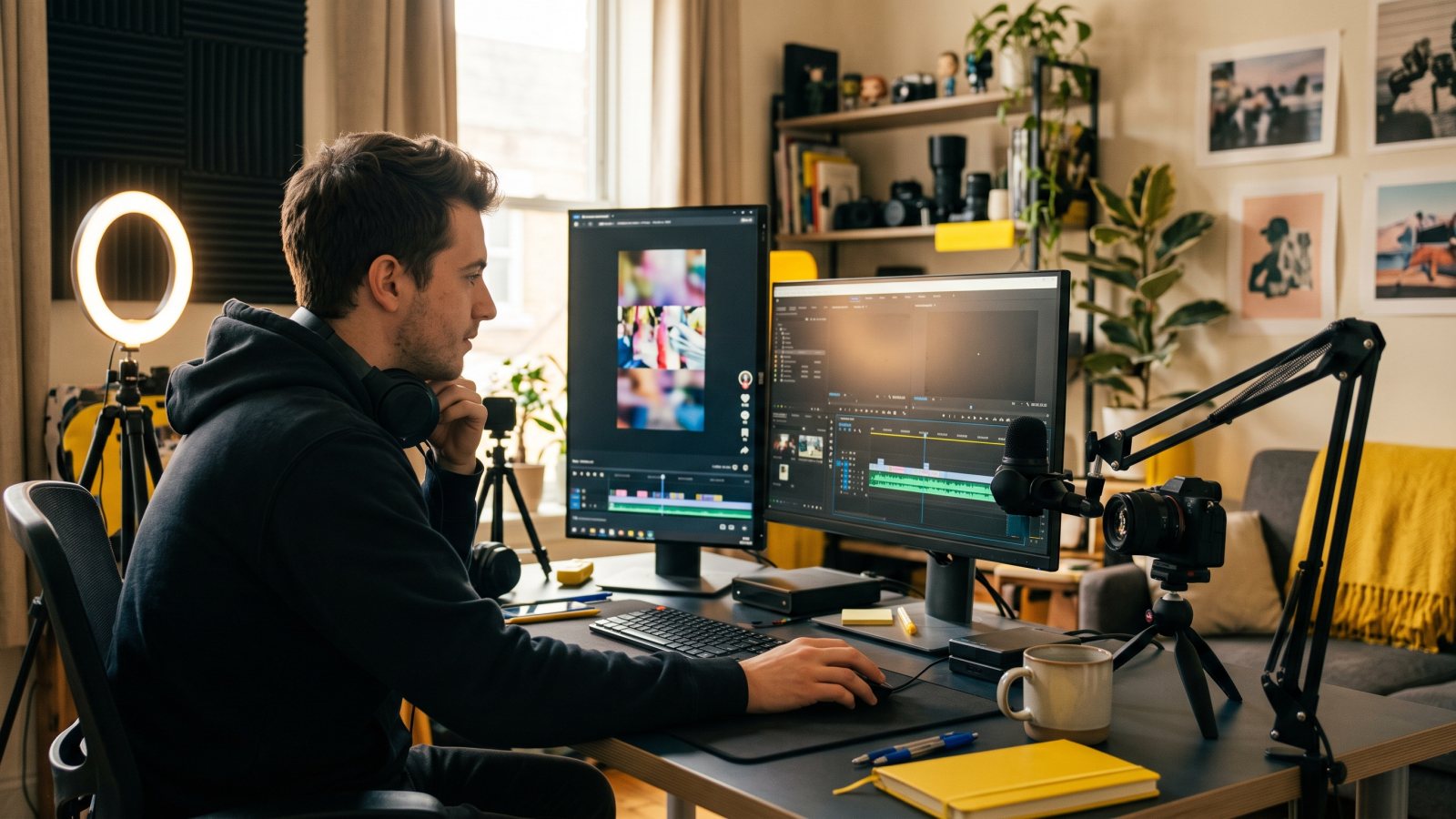
Short answer: to become an AI video creator in 2026, learn to direct (prompts, camera language, continuity), pick a niche (ads, social content, music videos, product films), build a portfolio of five finished pieces, and package one clear offer. You do not need film school or expensive gear; you need a method and practice. The free Nano Banana Academy teaches the method and ends with a verifiable certificate you can show clients.
What an AI video creator actually does
An AI video creator is a director who works with models instead of cameras. The job is less about pressing "generate" and more about:
- Turning a brief into a story and a shot list.
- Writing prompts that produce the right shot, and choosing the right model for it.
- Keeping characters, products and places consistent across shots.
- Editing, adding sound, picking formats and delivering clean files.
- Handling rights: consent, music licences, disclosure.
The skills, in order of impact
| Skill | Why it matters | Where to learn it |
|---|---|---|
| Prompt anatomy and camera language | Turns random clips into directed shots | Academy: AI Video Foundations |
| Image to video | Control over faces, products, composition | Academy: From Image to Motion |
| Continuity and shot lists | Turns clips into stories | Academy: Video Studio Mastery, Storytelling |
| Hooks and vertical formats | What clients pay for on social | Academy: Ads That Stop the Scroll |
| Sound and rhythm | Makes videos feel finished | Academy: Sound, Music and Rhythm |
| Transforming real footage | Relight and motion transfer are easy upsells | Academy: Transform Existing Footage |
| Rights and delivery | Protects you and your clients | Academy: Responsible AI Video |
Pick a niche
Generalists compete on price. Specialists get referrals. Popular niches in 2026:
- Performance ads and UGC-style clips for e-commerce brands: high volume, many variations.
- Faceless YouTube and TikTok channels, for clients or your own channel (see our faceless video generator).
- Music videos for independent artists (AI music video generator).
- Product films for brands that cannot afford a shoot.
- Real estate and hospitality: relighting and enhancing existing footage.
Build a portfolio of five pieces
- A directed cinematic shot (8 to 10 seconds) that shows you control camera and light.
- A product animation made from a still image.
- A 20 to 30 second story with one consistent character across five shots.
- A vertical ad with a hook in the first two seconds and a clear call to action.
- A before/after: a real clip relit, or a performance recast with motion transfer.
Under each piece, note the goal, the model and the main prompt. Clients love seeing the process. Add your Certified AI Video Expert link at the top.
Package an offer and price it
Sell outcomes, not generations. Examples:
- "10 vertical ad variations from your product photos, delivered in 5 days."
- "A monthly pack of 12 short videos for your social channels."
- "A 30-second music video from your track and your artwork."
Your costs are low and predictable: a plan from €19.99/mo covers a lot of client work, and 1080p or 4K upscaling is included at generation time. Read how to make money with AI video for pricing ideas.
Find your first clients
- Remake an existing ad for a brand you like and send it to them, with a short note.
- Post your process: before/after and prompt breakdowns perform well on social.
- Offer a pilot: one short video at a fixed price to start the relationship.
- Partner with agencies that need AI production capacity.
Frequently asked questions
Do I need film or editing experience?
No, but it helps. Camera language and pacing can be learned; the Academy starts from zero.
How long until I can take paid work?
With daily practice, many people have a portfolio ready in four to six weeks.
Is AI video a real career?
Yes. Brands, agencies and creators need people who can produce good AI video reliably and safely. The tools change; the directing skills stay.
Can I use real people in client videos?
Only with their consent, and never to impersonate or mislead. The Responsible AI Video course covers consent, likeness and music rights.