Short answer: learn AI video generation in this order: prompt structure, camera language, model choice, image-to-video, continuity across shots, then finishing (sound, format, upscale). Practise every day with small briefs, compare models on the same prompt, and keep a library of prompts that worked. The 30-day plan below follows that order, and the free Nano Banana Academy gives you the lessons and graded exercises for each step.
Why most people stay stuck at "random clips"
Beginners usually type a short idea ("a dog on a beach"), get something pretty but generic, and try again with different words. Without a method, every generation is a lottery. Learning AI video is mostly learning to direct: telling the model what the camera does, what happens in the shot and how it feels.
The skill stack, in order
1. Prompt anatomy
Write every prompt with five parts: subject, action, setting, camera and light. Example: A young chef plates a dessert with tweezers in a busy restaurant kitchen at night, slow dolly in to a close-up, warm practical lights and steam. Our guide to cinematic text prompts goes deeper.
2. Camera language
Shot sizes (wide, medium, close-up, macro), moves (dolly, pan, tilt, tracking, orbit, handheld) and angles (low, high, overhead). One camera move per shot is the rule that fixes most messy generations.
3. Model choice
Learn what each model does best. On Nano Banana, MiniMax H3 is the fast, realistic default for testing ideas, Seedance 2.5 brings lively motion to vertical social clips, and FLUX 3 Max gives the finest detail, native sound and takes of up to 20 seconds in 1080p. Run the same prompt on two models and note the difference.
4. Image to video
For faces, products and precise compositions, design the still first, then animate it with image to video. The prompt then only needs to describe motion.
5. Continuity and story
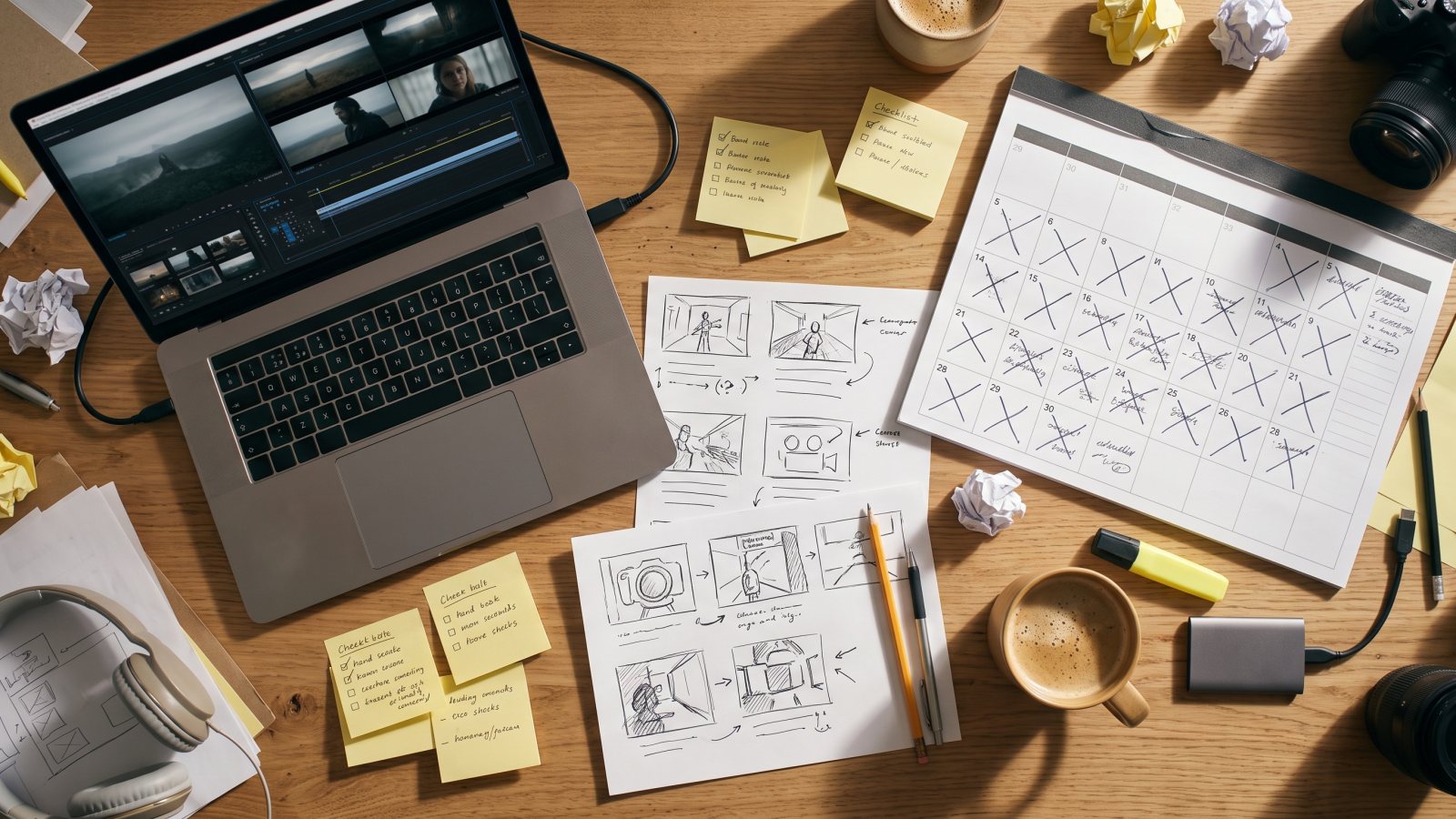
Keep the same character, outfit and place across shots with references, and plan a shot list before generating: establishing shot, action, reaction, payoff.
6. Finishing
Choose the format for the platform (9:16 for TikTok and Reels, 16:9 for YouTube), add music or native sound, cut on the beat, and upscale to 1080p or 4K for delivery.
The 30-day plan
| Week | Focus | Daily practice (20 to 30 min) | End-of-week brief |
|---|---|---|---|
| 1 | Prompt anatomy and camera language | One shot a day, a different camera move each time | A 10-second directed shot from a 25-word prompt |
| 2 | Models and image to video | Same prompt on two models; one still animated per day | A product or portrait animated from a still |
| 3 | Continuity and storytelling | Shot lists, then 2 to 3 linked shots | A 20-second story in five shots with one character |
| 4 | Finishing and specialisation | Sound, vertical ads, relight, upscale | A finished 1080p vertical ad with a hook and a call to action |
At the end of the month you have four finished pieces for a portfolio and, if you want it, everything you need for the Certified AI Video Expert exam.
Habits that speed up learning
- Keep a prompt library. Save every prompt that worked with its model and settings.
- Change one thing at a time. If you change the camera, the light and the subject together, you learn nothing from the result.
- Study real films. Pause a scene you love and describe it as a prompt.
- Generate short, then extend. 5-second tests are cheaper; extend the ones that work.
- Get feedback. The Academy prompt labs grade your prompts against concrete criteria, which is faster than guessing.
Follow the plan with the free Academy.
Frequently asked questions
How long does it take to learn AI video generation?
A few hours to get decent results, about a month of daily practice to direct consistent, story-driven videos. The core Academy courses take about 1 h 40 of reading plus exercises.
Can I learn AI video for free?
Yes. The Academy courses and exercises are free with an account. Generating your own videos uses credits.
Do I need to know video editing?
No, but basic editing ideas (cutting on action, pacing, formats) help. The Storytelling and Video Studio courses cover them.
What is the best first project?
A single 8 to 10 second directed shot: one subject, one action, one camera move. It teaches more than a long, vague project.